A veteran can come home, hang up the uniform, and still feel as if the battle is happening inside. A slammed door may sound like danger. A crowded store can feel impossible. Sleep may bring memories that daylight cannot silence. Christian help for PTSD veterans begins by telling the truth: these wounds are real, they are not a sign of weak faith, and no veteran has been abandoned by God.
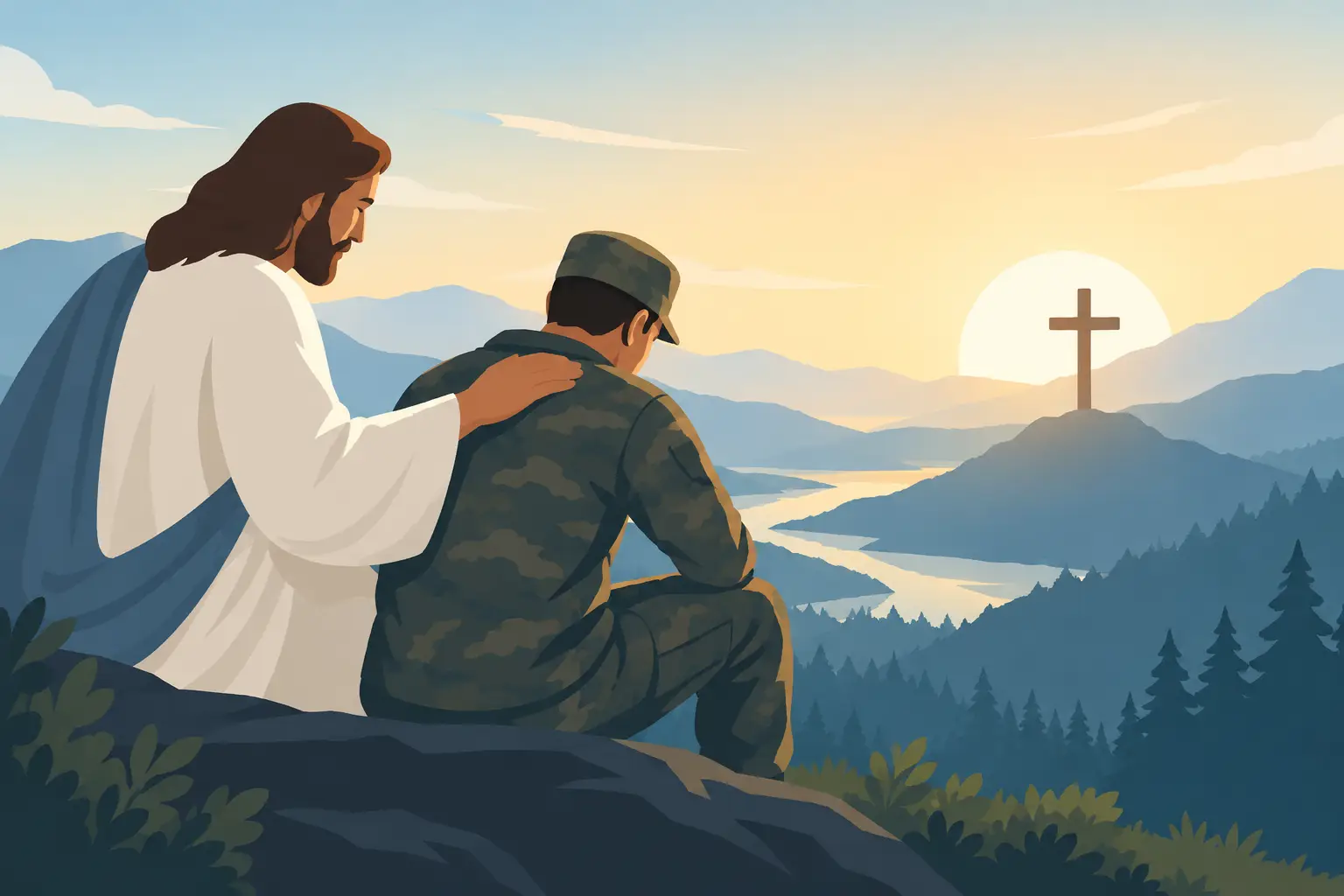
As a disabled veteran, I know that pain can make a person feel isolated from family, friends, and even the Lord. But Jesus does not turn away from the wounded. He comes near. He sees the parts of the story others cannot see, and He offers mercy to men and women who may feel they have nothing left to give.
PTSD Is Not a Spiritual Failure
Post-traumatic stress disorder can affect the body, mind, relationships, faith, and sense of safety. A veteran may live with hypervigilance, nightmares, anger, numbness, shame, depression, panic, or the deep exhaustion of always being on guard. Some carry grief for brothers and sisters in arms. Others carry memories they never expected to survive.
There is no honor in pretending these burdens do not exist. Many believers have been taught, directly or indirectly, that prayer should make every struggle disappear quickly. Prayer is powerful, but healing is not always instant. Sometimes God heals in a moment. Sometimes He restores a life through prayer, medical care, counseling, patient support, and many small acts of courage.
The Lord is not disappointed in the veteran who needs help. Psalm 34 tells us that the Lord is close to the brokenhearted. That promise does not mean the brokenhearted must hide their brokenness. It means they have a Savior who draws near in the middle of it.
Christian Help for PTSD Veterans Includes Real Support
Faith and professional treatment do not compete with one another. A trauma-informed counselor, a doctor, a veterans support program, or a trusted pastor may be part of God’s provision. Medication, therapy, sleep support, and treatment for co-occurring conditions can help a veteran regain stability. Choosing that care is not choosing less faith. It can be an act of wisdom and a declaration that your life has value.
A Christian counselor who understands trauma can help connect emotional symptoms with experiences that were too overwhelming to process alone. Yet the right fit matters. If a counselor or ministry leader minimizes your service, rushes you into sharing details, or treats every symptom as a simple spiritual problem, it is reasonable to seek someone better equipped to help.
For some veterans, a small church group becomes a place of belonging. For others, a large group is too much at first. It may be better to begin with one safe person: a spouse, fellow veteran, pastor, mature Christian friend, or counselor. Healing rarely grows in forced performance. It grows where honesty is met with patience.
Bring the Unspoken Things to God
PTSD often speaks through silence. A veteran may believe, “No one would understand,” or “God could not forgive what I saw, did, failed to do, or survived.” Those thoughts can become a prison. Jesus came to set captives free, and freedom begins when the hidden pain is brought into His light.
You do not need polished words. You can pray, “Lord, I am tired. I am angry. I am afraid. I do not know how to carry this anymore. Please help me.” That is a real prayer. The Holy Spirit is not intimidated by trembling hands, racing thoughts, or tears that come without warning.
Forgiveness can be part of healing, but it must never be used to pressure a hurting veteran into denying harm. Forgiveness is not calling evil good. It is not forgetting, excusing abuse, or returning to an unsafe relationship. It is a decision, often repeated over time, to place judgment in God’s hands and refuse to let bitterness become the final authority over your heart.
If guilt is heavy, bring that to Christ too. There is a difference between conviction, which leads us toward repentance and life, and crushing condemnation, which tells us there is no hope. Romans 8:1 declares that there is no condemnation for those who are in Christ Jesus. The cross is not too small for the memories that haunt you.
A Daily Rhythm for a Wounded Heart
When trauma has disrupted life, large promises can feel far away. A simple daily rhythm may be more helpful than trying to force a dramatic spiritual breakthrough. Begin with a few quiet minutes, perhaps holding a Bible, breathing slowly, and asking the Holy Spirit for peace. Read a short portion of Scripture rather than demanding hours of concentration from a mind that is exhausted.
A verse such as Isaiah 41:10 can become an anchor: “Do not fear, for I am with you.” Say it aloud. Write it down. Return to it during a difficult night. Worship music, a brief walk, journaling, and a phone call to a safe person can also help create a pattern of connection instead of isolation.
This is not a formula. One veteran may find comfort in quiet prayer, while another feels safer praying with a trusted friend. One may need to step away from a noisy church service for a season, while another needs the strength of worshipping in a congregation. The goal is not to look spiritually impressive. The goal is to keep turning toward God and healthy support.
A Prayer for the Veteran Who Is Struggling
Father God, You see Your son or daughter who has carried burdens that feel too heavy to name. Meet them in the night, in the flashbacks, in the anger, and in the moments when hope feels distant. Cover them with Your peace. Give them courage to ask for help and wisdom to receive the care You provide. Heal the wounds in their mind, body, and spirit. Break the power of shame and remind them that they are not forgotten. Through Jesus Christ, bring light into every dark place. Amen.
Families Need Grace Too
PTSD does not affect only the veteran. Spouses, children, parents, and friends may feel confused, shut out, or frightened by changes they do not understand. A loving family cannot heal PTSD by walking on eggshells, but it can make a powerful difference by learning, listening, and encouraging help without accusation.
Veterans also need to remember that asking a loved one to understand does not mean demanding that person carry everything alone. Healthy boundaries, counseling, and honest conversations can protect both the veteran and the family. Restoration often includes rebuilding trust one small choice at a time.
If thoughts of suicide, self-harm, or harming someone else are present, do not stay alone with them. Call or text 988 in the United States and press 1 for the Veterans Crisis Line, call emergency services, or go to the nearest emergency room. Tell a trusted person right away. Reaching out in that moment is not surrender. It is fighting for the life God has given you.
Your trauma is part of your story, but it does not get to write the ending. God can meet a veteran in the deepest darkness and begin transforming pain into compassion, purpose, and service. Take the next faithful step today: say the prayer, make the call, attend the appointment, or tell someone the truth. The Faith Warrior in you may feel weary, but by God’s grace, you are still here – and the Lord is still working.

Leave a Reply